As 2025 comes to a close, it provides an opportunity to reflect on a year marked by significant personal and professional change. In July, my wife and I relocated from Melbourne, Australia, to Vancouver, Canada. This move brought new professional opportunities as well as allowing us to be closer to extended family.
I was fortunate to be able to secure a role prior to departing Melbourne with the help of connections I made through Ozwater ’25 in Adelaide. In doing so, I transitioned seamlessly from Spiire, where I worked with regional water utility clients to Jacobs, where I am managing rehabilitation of one of Canada’s largest wastewater treatment plant projects. I am grateful that both roles have allowed me to apply my skills and passion for water sector to deliver impactful infrastructure projects. The move to Jacobs has enabled me to take on challenges at a larger scale within a new context and methods of project delivery.
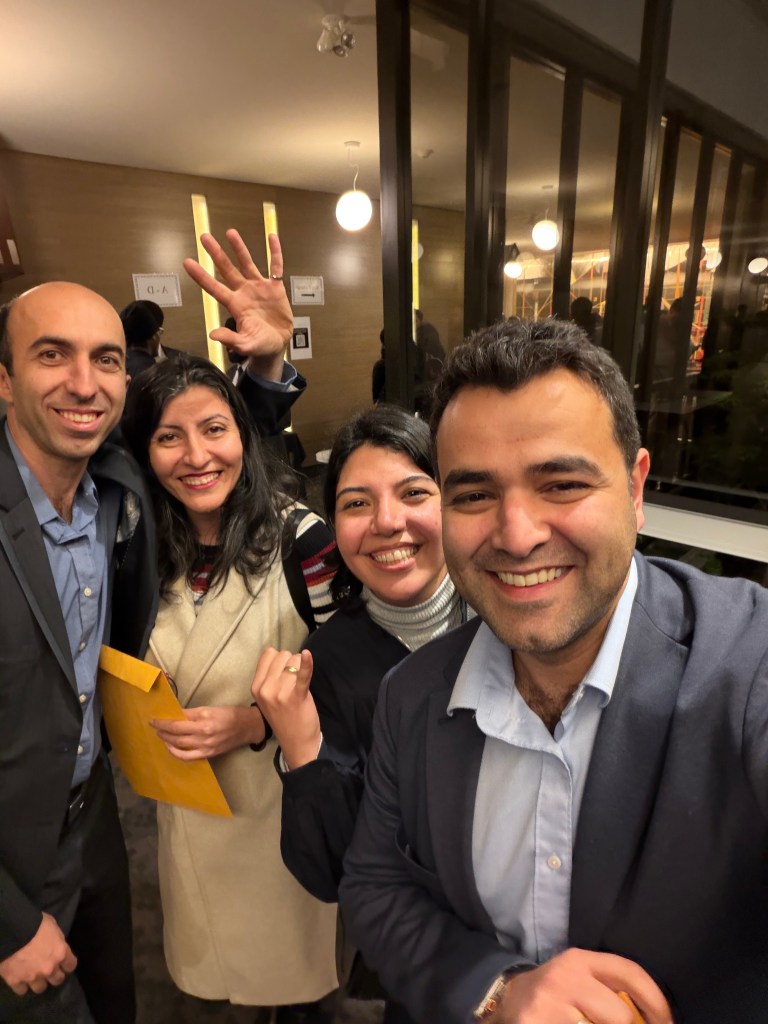
During the last six months, I obtained my Canadian registration as a professional engineer thanks to mutual recognition agreements with Australia. For good measure, I also attended a Canadian tradition of taking an oath as an engineer, a pledge to ethical conduct, integrity and service to humanity and started wearing its distinctive iron ring. These have made me feel welcomed in Canada and the engineering profession.
While my focus on creating content for Qanat was reduced during this transition period, the blog nonetheless had a 60% year-over-year growth in its viewership. This, certainly, is a reflection of increased interest in water business operations and infrastructure projects which most of this year’s content was about.
Looking ahead to 2026, my focus will be on further professional development and a return to producing educational content on the blog that advocates for collaboration and innovation in the water industry. Moreover, starting in July, I will resume my legal studies remotely hoping to explore the intersection of technical and legal knowledge that is necessary in delivering cost-effective and meaningful infrastructure programs.
Finally, I have to acknowledge that any human endeavor is impossible in isolation. Soyun Punyadasa, Sophie Barton, Leigh Holmes, Ross Carnegie, Harry Oakley-Warren, Ashley Wilkie, and Shahin Hoda, thank you! Your help and guidance allowed me to navigate through 2025.
 QANAT
QANAT 