Originally published in 2011, Charles Fishman’s The Big Thirst remains as strikingly relevant today as it was over a decade ago. Fishman’s storytelling is both journalistic and poetic. It is a a captivating blend of science, history, and human observation. He reminds us that water, the most ordinary substance in our lives, is also the most extraordinary. He takes readers on a journey through our paradoxical relationship with water: the very thing that sustains every form of life on earth, yet is so often taken for granted. We turn on a tap and expect it to flow endlessly, yet we rarely pause to consider its journey or its fragility.
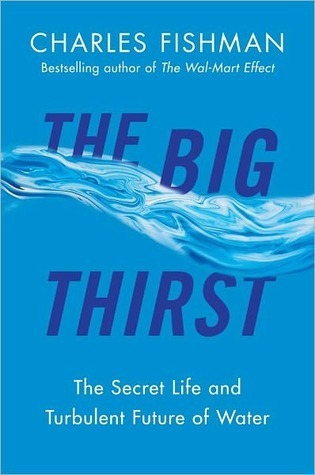
Fishman explores this paradox with precision. Water is eternal, it is never created nor destroyed. It moves through oceans, clouds, soil, and us, but our relationship with it is fleeting. It will endure long after we are gone. Modern comforts has given us what he calls “water amnesia”: we’ve forgotten how rare and precious clean, reliable water really is. From agriculture to semiconductor manufacturing, from sanitation to recreation, water is the quiet partner in nearly every human endeavour.
One of the book’s central insights is that our emotional connection to water often blinds us to its real value. Our challenge is not a shortage of water, but a shortage of attention. We recoil at the idea of paying more for its availability, yet we rely on costly and complex infrastructure to deliver and treat it every single day. Fishman argues that the real crisis lies in this disconnect: we prize water’s availability but ignore the systems and innovation that sustain it.
Through vivid case studies — from Las Vegas’s desert ingenuity to Toowoomba’s bold reuse project, and from Delhi’s patchwork water supply to the quiet revolutions unfolding in industrial reuse — Fishman shows that the problems we face with water are not insurmountable. Innovation thrives when necessity sharpens focus. He highlights how businesses, cities, and individuals are already transforming scarcity into opportunity through smarter technology, efficient reuse, and a renewed respect for water. The path forward, he suggests, begins not with grand gestures but with local action and the willingness to see water differently.
The most hopeful message of The Big Thirst is that the future of water is not one of doom, but of opportunity. We can “fix” water by rethinking how we use, reuse, and treat water. Instead of being alarmist and reactive, Fishman urges us to meet the challenge with purpose, by aligning technology, policy, and pricing of water with its true worth. The solutions already exist. What is needed now is the willingness to collaborate and to look beyond our own backyard. Because, as Fishman reminds us with quiet clarity, water will be just fine without us. But we will not be fine without water.
 QANAT
QANAT 