It is no surprise to casual observers of the construction industry to learn that the industry is struggling to cope with delivering cost effective infrastructure in a timely fashion. There are a number of organisations like Australian Constructors Association (ACA) that are advocating for change in the industry and point to the economic uncertainty in the form of rising interest rates, shortage of skilled work and adversarial contracts as reasons for projects failing to deliver on their promises and attracting new players into the supply chain. In particular, the need to remove complex legal jargon from contractual agreements and more collaborative forms of contracting have been attracting a lot of attention as of late. In this article, we will explore an existing collaborative form of contract, known as NEC4, and analyse its benefits as it becomes more popular in the water industry contracting.
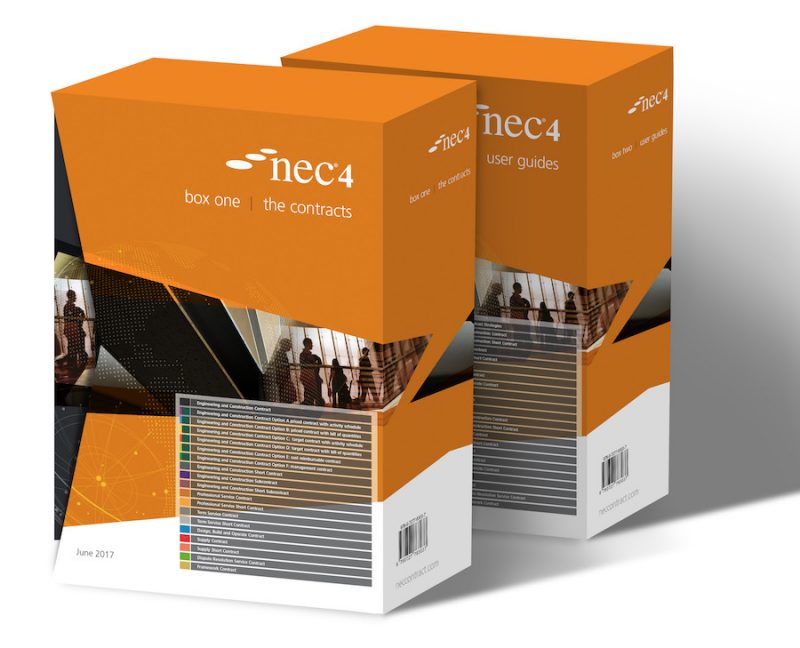
The New Engineering and Construction contract (NEC) is a collaborative model of contracting that has been popular internationally with infrastructure projects. This form of contracting, however, has had limited penetration into the Australian market. NEC contracts offer a fairer and up-to-date framework for contracting in Australia with its latest iteration for the Australian market, NEC4 Y(AUS), released in 2021. Sydney Water, one of the largest water utilities in Australia adopted and is leading procurement through this model as a way of promoting collaboration with its capital program delivery partners. Three consortia, D4C, Confluence, and B2G are currently delivering projects under this model with Sydney Water’s ‘Partnering for Success’ framework. The success of NEC and future adoption in the industry will very likely depend on the success of the model under Sydney Water arrangement.
One of the main benefits of NEC4 is that it offers a collaborative approach to contracting which Infrastructure Australia and Australian Constructors Association have been arguing the industry needs and demands. The model encourages contractors to be involved in the whole life cycle of a project which could produce better outcomes for the client and their customers.
Another benefit of the NEC4 is its simple language which is easily understood by engineers and project managers. It offers a standard form contract that can be implemented with little modification for various forms of procurement including Design only, Design and Construct, and Supply only.
NEC4 aims to restore the inherent imbalance that exists in the current form of contracting that is primarily based on ISO standard forms (such as AS4000 or AS4902) and are heavily modified to favour the clients. It provides a platform to provide further benefits such as:
– Flexible remuneration models
– Promotes mutual trust and cooperation
– Early contractor engagement
– Clear and multistage conflict resolution mechanisms
– Options for incentive payments based on contractor performance
– Fairer allocation of risks leading to lower costs for the clients and their customers
In order to maximise the benefits of these collaborative forms of contracting, it is important to think about the current state of the contracting in Australia. Project managers and engineers have been trained for decades to adopt an adversarial position in administering outdated ISO forms of contracts. One of the main criticisms of ISO contracts is that it has been unchanged for more than 20 years and does not reflect the law during this intervening period. Latest attempts to modernise the ISO standard contracts was abandoned in 2021.
With this in mind, training and education will be critical to ensuring that these administrators are aware of the rights and obligations under the NEC4 contract and incorporate them into their work. NEC4 has been described as a project management tool and it demands the adoption of best practice project management in conjunction with NEC4 models of contracting. It is, therefore, equally important to develop the skill sets required in the area of project management at the same time as NEC4 contract administration. There are a multitude of legal firms and training organisations that offer such training and can be invariably helpful in transitioning to a collaborative modes of operation.
Australian government entities and by extension water authorities are the most significant purchasers of construction services in Australia. The demand for better value for customers requires more innovative approaches in procurement and the NEC4 suite of contracts provides a window of opportunity that water authorities are well placed to take advantage of. This type of contracting, however, requires both parties to collaborate in good faith and tends to provide little value when parties adopt an adversarial position. It is therefore prudent on those adopting these models to educate themselves with their operation and differentiate it clearly across the organisation with the existing models of contracting. Undoubtedly, Sydney Water’s ‘Partnering for Success’ will be watched with great interest in the construction industry in hopes that its success will lead to greater adoption of NEC4. All stakeholders including clients, customers and contractors will have an interest in ensuring collaborative models are successful and adopted widely, so that the industry can continue to deliver infrastructure projects and thrive into the future.
Further reading:
Disrupt or Die Report by Australian Constructors Association
Credit where Credit’s is Due by Australian Constructors Association
2021 Australian Infrastructure Plan by Infrastructure Australia
 QANAT
QANAT 