It might very well be! Melbourne was once well known as “Marvellous Smellbourne” as it struggled with managing its sewer that flowed free and clogged up its drainage system. Yes, you heard that right. Melbourne did not have a dedicated sewerage system until 1897 when its construction started under the leadership of William Thwaites. Melbourne has since come a long way, being named the most livable city every year by The Economist consecutively between 2011 and 2017.

Today, thanks to two bulk sewer treatment facilities, the sewer that is collected through Melbourne’s vast sewerage network, brought on site and treated in a number of stages, and finally discharged back to the environment. The smell generated by sewer treatment plants is hardly noticeable thanks to large swathes of land they are built on and their remoteness to any nearby residential area. However, if you are smelling sewer, the culprit is very likely the pipelines in which sewer is transferred to these treatment plants. You may be living near one of many sewer vent shafts or an unsuspecting sewer pump station.
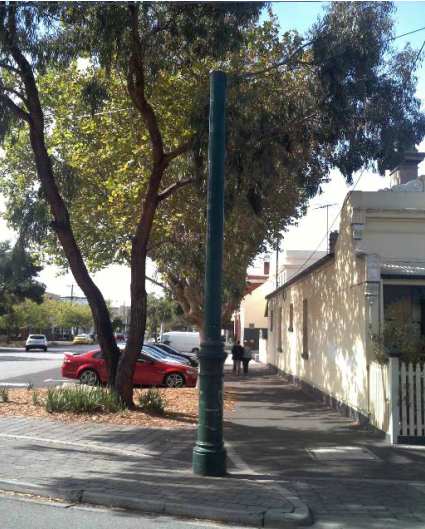
One of the ingredients that gives sewer its distinctive foul smell is hydrogen sulphide which is characterised by its rotten egg smell; left unabated in the pipeline, hydrogen sulphide can have dire consequences by turning into sulphuric acid and eating away at concrete and its structural integrity over time.
As a way of alleviating this impact on sewer pipeline and pump stations, vent stacks or shafts are installed by retail water authorities such as South East Water and Yarra Valley Water which in some instances can reach up to 14meters tall. Yarra Valley Water alone has 1200 sewer vents located in its service area of approximately 4,000 square kilometers.
If you are interested in knowing whether you live close to one of these vent shafts, you can find out online! Most water authorities publish their asset location and details to the public. All you have to is to sign up for an account and start searching. The following represent the water and sewer assets in most of metropolitan Melbourne. Note Greater Western Water does not publish its Geographic Information System (GIS) information (including vent shafts).
Melbourne Water Asset Map
South East Water Asset Map
Yarra Valley Water Asset Map
Sources:
Melbourne Water timeline of history
South East Water Sewer Vent Shafts [PDF]
Yarra Valley Sewer Vents Improvement Program
Goulburn Valley Water Ventilation of Sewer Network [PDF]
 QANAT
QANAT 